
Writing the Unconscious: A Workshop with Annie Rogers, Ph.D. and Nathan Lupo, MFT

Saturdays, February 21st and 28th, 10:00-11:30 a.m. Online via Zoom
Late in his career, Jacques Lacan worked to articulate how writing may represent that which is experienced beyond sense, and so indicate a frontier between the Symbolic Order (that of language) and what he called the Real, the lived experience that is beyond language and therefore unsayable. “Writing,” he says, “is what inscribes the real.” So much of psychoanalytic writing aims at meaning by linking theoretical concepts to clinical experience in order to diagnose and treat, and develop theory out of clinical experience. This is not an unworthy endeavor, but what gets left behind in this kind of writing are the traces of the real unconscious that linger amidst the signifiers put forward by our patients in their speech, their dreams, and by the space opened via parapraxis.
In this workshop, we aim at developing these traces toward a poetics of the unconscious so that what lingers amidst what is said may take shape in a way that doesn’t collapse the real into symbolic meaning but opens it into an experience of the ineffable.
Offered in two parts, this workshop is an invitation to explore writing as an experience of traces of the unconscious. “The written word is the limit or shoreline against which the Real breaks into the Symbolic,” Lacan tells us in Liturattere. The aim is to introduce writing that works in the curvature of the unconscious, marking the analyst or psychotherapist by allowing discovery of surprising linkages.
The writing exercises will introduce participants into a frisson of words and silences through poetics, word clouds, singular and repeating phrases, (re)marks of the clinic, dreams, memories and sheer nonsense. This is writing to find what’s possible to say, and what’s impossible--the unsayable that we can only circle indirectly.
In the first writing workshop, we will introduce exemplars of the unconscious in language: the puzzling rubric of dreams, poetics as a form of condensation, and the art of poetry that elides any summary of meaning. We will focus on the constructive use of memory and its limits through various poetic devices, pushing toward the unknown. This is a space to consider and reconsider, to write, to read aloud, to play with language and hear its resonances.
The second writing workshop will focus on the problematics of case histories as a genre. We will invent new forms of writing case study notes that do not erase the speaking patient, nor create an imaginary version of what is happening in the mind of the patient by the analyst or psychotherapist. To work with the art of the note, please bring the dream(s) of one patient and a few sentences of their speech concerning that dream. The aim is to find a form that respects the absolute Otherness of any encounter with another human being’s unconscious, the mystery of language and its non-transparency, whether spoken or written.
We will ask all participants to sign a confidentiality agreement prior to this second meeting.
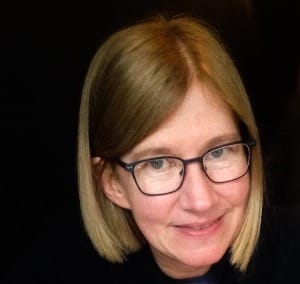
Annie G. Rogers, Ph.D., is Professor Emerita of Psychoanalysis and Clinical Psychology at Hampshire College and has a private practice in Amherst, Massachusetts. She is a supervising and teaching Analyst at the Lacanian School of Psychoanalysis in San Francisco, California. Dr. Rogers has published fiction (After Words: a novel, 2024), as well as three clinical books: A Shining Affliction: A Story of Harm and Healing in Psychotherapy (1995); The Unsayable: The Hidden Language of Trauma (2005); and Incandescent Alphabets: Psychosis and the Enigma of Language (2016).
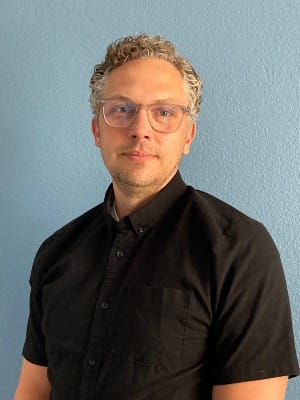
Nathan Lupo, MFT is President of the Sacramento Psychoanalytic Society and a candidate analyst at the Lacanian School of Psychoanalysis. He has a private practice in Sacramento.